Name Muscles In Arm / Arm Definition Bones Muscles Facts Britannica. In short, we name muscles in respect to their location, size, shape, direction (orientation of the fibers), number of origins, location of origin and insertion iii. Your arm muscles allow you to perform hundreds of everyday movements, from making a fist to bending your thumb. The glenohumeral joint—commonly referred to as the shoulder joint—consists of the attachment of the humerus bone to the scapula. Muscles that act on the shoulder can be classified as extrinsic, intrinsic, pectoral, or upper arm. The arms are the most used body parts and they can be subjected to much pressure and strain.
Latissimus dorsi is the name of the large muscles that run from under your arms, across your sides, and then across the middle of your back. Flexion of the forearm is achieved by a group of three muscles — the brachialis, biceps brachii, and brachioradialis. Now that you've learned them, you're ready to tackle this k. The upper arm bones and muscles consist of the humerus, biceps, and triceps. They are all innervated by the musculocutaneous nerve.
Muscles Of The Upper Limb Boundless Anatomy And Physiology from s3-us-west-2.amazonaws.com Almost every muscle constitutes one part of a pair of identical bilateral muscles, found on both sides, resulting in approximately 320 pairs of muscles, as presented in this article. The biceps brachii is on the anterior side of the humerus and is the prime mover (agonist) responsible for flexing the forearm. See more ideas about muscle anatomy, anatomy and physiology, body anatomy. There are three muscles on the upper arm that are parallel to the long axis of the humerus, the biceps brachii, the brachialis, and the triceps brachii. This muscle moves your arm backward, brings it in toward your body and rotates it inward. The muscle that extends, or straightens, the arm is the triceps, which arises on the humerus and attaches to the ulna at the elbow; We'll go over the bones, joints, muscles, nerves, and blood vessels that make up the human arm. Now that you've learned them, you're ready to tackle this k.
This is a table of skeletal muscles of the human anatomy.
There are around 650 skeletal muscles within the typical human body. The skeletal muscle's anatomical location or its relationship to a particular bone often determines its name. In short, we name muscles in respect to their location, size, shape, direction (orientation of the fibers), number of origins, location of origin and insertion iii. Upper arm muscle pain is characterized by mild to severe pain in the muscles between the shoulder and the elbow. Your arm muscles allow you to perform hundreds of everyday movements, from making a fist to bending your thumb. We name many muscles as a result of their location. The upper arm bones and muscles consist of the humerus, biceps, and triceps. These flexor muscles are all located on the anterior side of the upper arm and extend from the humerus and scapula to the ulna and radius of the forearm. There are also a handful of other muscles that support these main four. They are all innervated by the musculocutaneous nerve. The posterior compartment contains only the triceps brachii muscle, supplied by the radial nerve. Arm, in zoology, either of the forelimbs or upper limbs of ordinarily bipedal vertebrates, particularly humans and other primates. Upper arm muscles will be discussed in a later section since they primarily promote forearm movement.
The coracobrachialis is a deep muscle on the front of your upper arm that moves your arm forward. Now that you've learned them, you're ready to tackle this k. Arm muscles the (upper) arm muscles are a group of five muscles located in the region between the shoulder and elbow joints. The latissimus dorsi is a large muscle that originates along your middle and lower spine and attaches to the back of your upper arm. The arms are the most used body parts and they can be subjected to much pressure and strain.
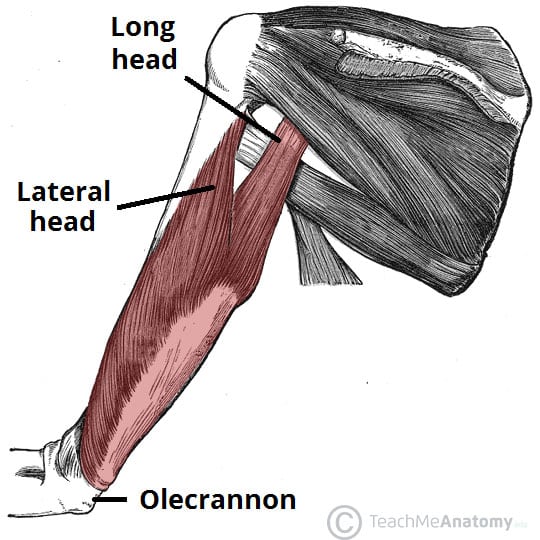
Muscles Of The Upper Arm Biceps Triceps Teachmeanatomy from teachmeanatomy.info Latissimus dorsi is the name of the large muscles that run from under your arms, across your sides, and then across the middle of your back. The upper arm bones and muscles consist of the humerus, biceps, and triceps. The latissimus dorsi is a large muscle that originates along your middle and lower spine and attaches to the back of your upper arm. In short, we name muscles in respect to their location, size, shape, direction (orientation of the fibers), number of origins, location of origin and insertion iii. 10388 w state rd 84 #111 davie, fl 33324 phone: Here, we will look at the muscles that move the arm at the shoulder, elbow, and wrist joints. They help in bending the arm towards the shoulders. Upper arm muscles will be discussed in a later section since they primarily promote forearm movement.
The deltoid muscle (derived its name from the greek letter delta) is a large, triangular muscle occupying the upper arm and the shoulder giving it this rounded shape.
Your arm muscles allow you to perform hundreds of everyday movements, from making a fist to bending your thumb. Upper arm muscles will be discussed in a later section since they primarily promote forearm movement. They are all innervated by the musculocutaneous nerve. Almost every muscle constitutes one part of a pair of identical bilateral muscles, found on both sides, resulting in approximately 320 pairs of muscles, as presented in this article. There are three muscles on the upper arm that are parallel to the long axis of the humerus, the biceps brachii, the brachialis, and the triceps brachii. For the most part, they are polyarticular. Arm muscles the (upper) arm muscles are a group of five muscles located in the region between the shoulder and elbow joints. The following tables list some specific muscles in the human body by region of the body with links to pages about the specific muscles and/or pages that. Muscles that act on the shoulder can be classified as extrinsic, intrinsic, pectoral, or upper arm. Biceps, triceps, forearm flexors, and forearm extensors. The muscle that extends, or straightens, the arm is the triceps, which arises on the humerus and attaches to the ulna at the elbow; Arm, in zoology, either of the forelimbs or upper limbs of ordinarily bipedal vertebrates, particularly humans and other primates. The upper arm bones and muscles consist of the humerus, biceps, and triceps.
Muscles of both the upper arm and forearm control movement of the forearm. In short, we name muscles in respect to their location, size, shape, direction (orientation of the fibers), number of origins, location of origin and insertion iii. The muscle that extends, or straightens, the arm is the triceps, which arises on the humerus and attaches to the ulna at the elbow; There are also a handful of other muscles that support these main four. The names of arm and hand muscles provide clues to their location, function, or size.
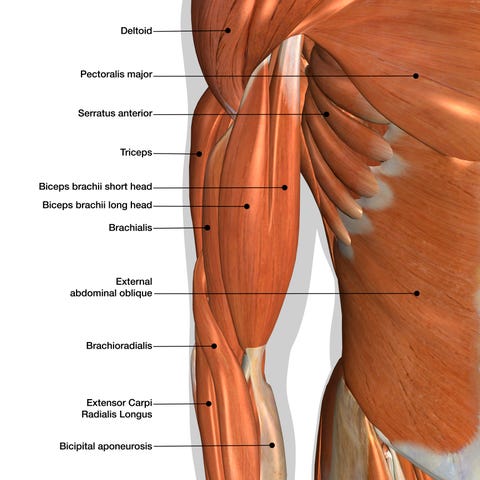
The 22 Best Biceps Exercises For Arm Workouts To Build Muscle from hips.hearstapps.com We'll go over the bones, joints, muscles, nerves, and blood vessels that make up the human arm. Muscles of both the upper arm and forearm control movement of the forearm. Upper arm muscle pain is characterized by mild to severe pain in the muscles between the shoulder and the elbow. Furthermore, for example, the pectoralis major is an important muscle of the chest. They are all innervated by the musculocutaneous nerve. The muscle that extends, or straightens, the arm is the triceps, which arises on the humerus and attaches to the ulna at the elbow; We'll go over all the muscles in your upper arm and forearm as well as explain. They help in bending the arm towards the shoulders.
This is an online quiz called muscles of the arm there is a printable worksheet available for download here so you can take the quiz with pen and paper.
The biceps brachii is on the anterior side of the humerus and is the prime mover (agonist) responsible for flexing the forearm. The glenohumeral joint—commonly referred to as the shoulder joint—consists of the attachment of the humerus bone to the scapula. Your arm muscles allow you to perform hundreds of everyday movements, from making a fist to bending your thumb. For the most part, they are polyarticular. The brachialis and biceps muscles act to bend the arm at the elbow. The term pectoral means relating to the chest.; The brachialis (arm muscle) and gluteus (buttock) muscles are examples. Upper arm muscles will be discussed in a later section since they primarily promote forearm movement. The muscles in the forearms are numerous and complex. The arm is one of the body's most complex and frequently used structures. Other examples are muscles of the arm that include the term brachii (of the arm). Muscles that act on the shoulder can be classified as extrinsic, intrinsic, pectoral, or upper arm. We name many muscles as a result of their location.